
How to Begin Writing Your Legacy: Turning Memories Into Meaning
Introduction: The Beauty of Leaving a Written Legacy
We all reach a point in life when we start wondering what stories will remain after us — not the headlines or achievements, but the quiet moments that shaped who we are.
Maybe it’s a recipe your mother whispered over a kitchen counter, a piece of advice your father gave on a long drive, or a memory that still makes you smile decades later.
Writing your legacy isn’t about perfection. It’s about presence — gathering the wisdom, laughter, and love that time has given and passing it forward with grace.
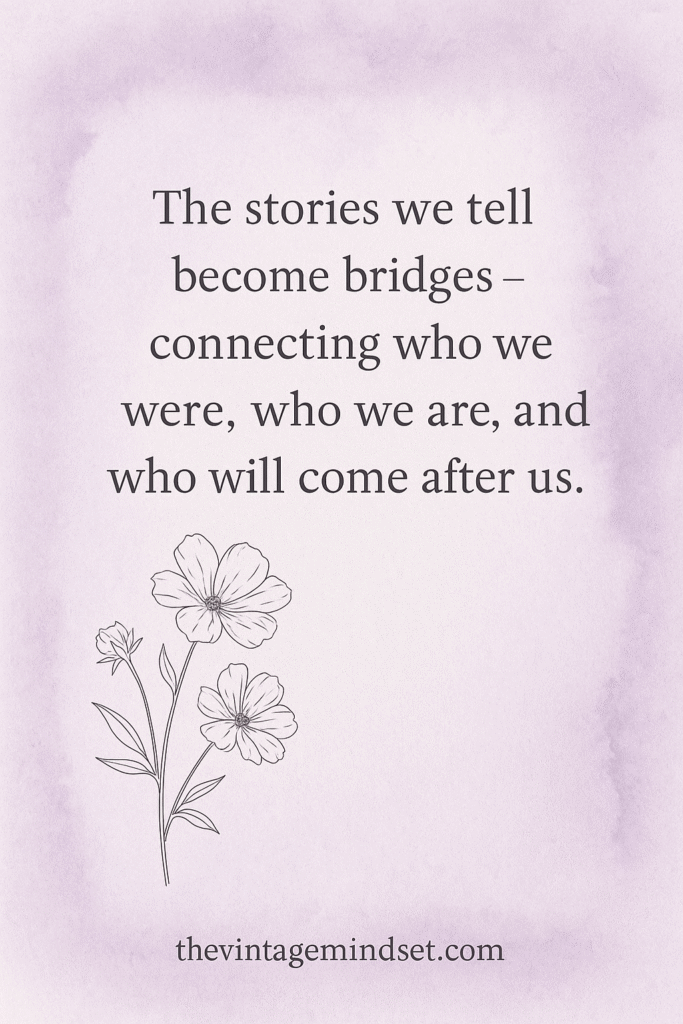
Why Writing Your Legacy Matters
Life moves fast. Our stories can fade faster than we expect — tucked away in boxes, scattered through photos, or left unspoken.
Writing your legacy is your way of keeping the light on.
- It helps you reflect on your journey and rediscover who you’ve become.
- It allows you to honor your experiences — both the beautiful and the hard.
- It gives your loved ones something to hold onto when they need your voice, your faith, your strength.
A written legacy isn’t about ego; it’s about connection. It’s your gentle reminder to future generations: I was here. I loved deeply. And I learned along the way.
What Is a Legacy Journal or Storytelling Workbook?
A Legacy Journal is a guided space to capture your memories, lessons, and reflections — one story at a time.
It might include prompts such as:
- “A piece of advice I would give my younger self is…”
- “A family tradition I hope continues is…”
- “A moment that changed the way I see life…”
Meanwhile, a Storytelling Workbook helps you turn those moments into meaningful narratives — from childhood memories to faith-filled turning points.
Together, they form a keepsake — a tangible reflection of a life beautifully lived.
How to Start Writing Your Legacy
You don’t need to be a writer — only a quiet moment and an open heart.
Here’s how to begin your own storytelling practice:
1. Create Your Sacred Space
Light a candle, make a cup of tea, and settle in a cozy spot that feels like “you.”
2. Start Small
Choose one prompt. Write freely, without editing. The truth often unfolds gently.
3. Include Your Senses
Write what you see, hear, and feel. These small details bring your memories to life.
For example: “The smell of coffee in Nanay’s kitchen still reminds me of home.”
(Nanay — the Filipino word for “mother” — carries warmth, care, and the quiet kind of love that fills a home with comfort and meaning.)
4. Reflect, Don’t Rush
This is not a project to finish — it’s a moment to savor. One paragraph is enough.
5. Add Your Faith, Humor, and Heart
Honest writing always shines brighter than polished perfection.
Final Thoughts: The Legacy of Words
Leaving a legacy isn’t about what the world says about you — it’s about what your heart whispers to those you love.
Whether through a handwritten journal, a workbook, or quiet letters, your words carry the strength of generations.
Start today. Write one memory. Capture one lesson. Tell one story.
Someday, someone will read your words and feel less alone — because of you.
Begin your legacy today with our free printable journal.
Download Whispers of My Journey and Tales from My Table here.
“A legacy isn’t written in stone — it’s written in the quiet kindness, the laughter, and the lessons we leave behind.”